 The Saltbox Skillet
Oven-Crisp Fish Sandwiches Without Deep Frying
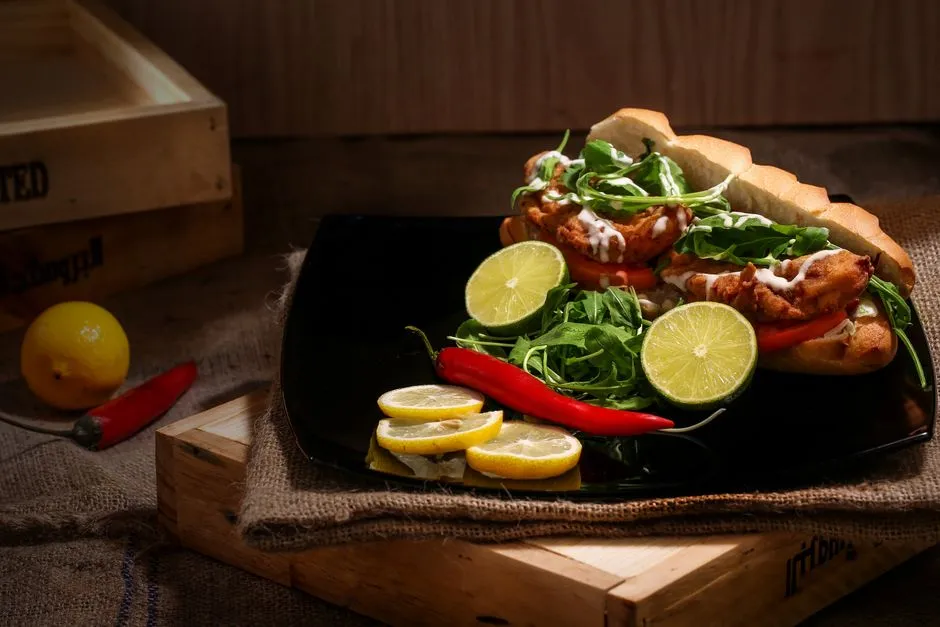
The oven can deliver crunch without a fryer
A seafood-shack fish sandwich usually earns its appeal through contrast: hot flaky fish, a crisp shell, cool slaw, sharp sauce, and a soft toasted bun. Deep frying is excellent at that job, but it is not the only employee available.
This version uses a hot oven, an elevated rack, and an oiled panko coating. The rack lets heat circulate under the fish instead of steaming its underside into breadcrumb pajamas. The recipe makes four sandwiches.
Ingredients
- 4 skinless white-fish fillets, 4 to 5 ounces each and similar in thickness
- 1/2 teaspoon fine salt
- 1/4 teaspoon black pepper
- 1/3 cup all-purpose flour
- 2 large eggs
- 1 tablespoon water
- 1 1/2 cups panko breadcrumbs
- 1 teaspoon paprika
- 1/2 teaspoon garlic powder
- 2 to 3 tablespoons neutral oil, for misting or brushing
- 4 sturdy sandwich buns
- 1/3 cup prepared tartar sauce or another suitable sauce
- 2 cups prepared vinegar slaw for fish, lightly drained
- Lemon wedges, optional
Fish, egg, wheat, and some prepared sauces are common allergen concerns. Check every package and prevent cross-contact for the people eating.
Prepare the oven and fish
Heat the oven to 450°F (232.2°C). Set an oven-safe wire rack over a rimmed sheet pan and lightly oil the rack. If you do not own a rack, use an oiled parchment-lined pan and turn the fish carefully after the underside sets, accepting that the coating may be a little less crisp.
Keep the fish refrigerated until prep. Pat each fillet thoroughly dry and check for pin bones. If one piece is dramatically thicker, divide or trim it into a more even portion rather than pretending all fish share a schedule.
Season both sides with the salt and pepper.
Build a coating that stays attached
Place the flour in a shallow bowl. In a second bowl, beat the eggs with 1 tablespoon water. In a third, mix the panko, paprika, and garlic powder.
Working with one fillet at a time, coat it lightly in flour and shake off the extra. Dip it completely in egg, let excess drip away, then press it into the panko on every side. Set it on the prepared rack. Repeat with the remaining fish.
Mist or gently brush the tops and sides with oil. The crumbs should look lightly moistened, not submerged in a spa treatment. Let the coated fish stand for about five minutes; this brief pause helps the layers settle.
Bake to temperature, not optimism
Bake for 10 minutes, then begin checking the thickest part with an instant-read thermometer. Continue until each piece reaches 145°F (62.8°C), usually about 10 to 15 minutes total depending on thickness and oven behavior. The fish should be opaque and flake under gentle pressure, but the thermometer is the safety check.
If the coating needs more color once the fish has reached temperature, a very brief broil can help. Watch continuously, keep the pan an appropriate distance from the element, and stop before the panko becomes a cautionary tale.
Transfer the fish to a clean plate and rest for two minutes. Do not return cooked fish to a plate or tool that held it raw.
Toast, stack, and serve promptly
During the final baking minutes, toast the cut sides of the buns. Spread each with about 1 tablespoon plus 1 teaspoon sauce, add one fish fillet, and top with roughly 1/2 cup well-drained slaw. Serve with lemon if desired.
The sandwich is best immediately, while the coating and slaw are both still making convincing crunch noises. More measured mains live in the seafood mains collection.
If preparing the meal in stages, make and chill the slaw first, mix the sauce second, and bread the cold fish last. Keep raw seafood separate from ready-to-eat ingredients, wash hands and surfaces after contact, and refrigerate leftovers promptly. Reheat cooked fish until thoroughly hot, knowing the coating will be less crisp the second time. Yesterday's sandwich can still be lunch; it simply no longer believes it is auditioning for a commercial.
Frequently asked questions
Which fish works best for a baked fish sandwich?
Firm, mild white fish such as cod, haddock, pollock, or hake works well when cut into even bun-sized portions. Choose fillets of similar thickness so they finish together, and check for bones. Fresh and properly thawed frozen fish can both succeed. Species substitutions may change flavor, flake size, cooking time, price, and sustainability considerations.
How do I keep the panko coating from falling off?
Pat the fish very dry, apply a thin flour coat, shake off excess, then cover it fully with beaten egg before pressing on the crumbs. Let the breaded pieces stand for five minutes while the oven finishes heating. Handle them by the sides and turn only if your setup requires it; unnecessary poking is how breadcrumbs seek independence.
Can I use an air fryer for this fish sandwich?
Yes, if the fillets fit in one layer with space for air circulation. Lightly oil the basket and coating, then cook according to the appliance's guidance while checking the thickest portion with an instant-read thermometer. Air fryers vary substantially, so reduce neither safety to a timer nor dinner to a game of appliance roulette.
Why is my baked fish coating pale?
Panko needs surface oil and strong heat to brown. Mist or brush the coating evenly, fully preheat the oven, and avoid crowding the rack. You can toast the crumbs in a skillet before breading for deeper color, but cool them first. Browning is not proof of fish doneness, so still verify the center temperature separately.
Can I prepare breaded fish ahead of time?
You can bread the cold fish shortly before baking and keep it refrigerated on a rack, but a long rest can make the coating damp. Do not leave raw seafood at room temperature while preparing other dishes. For the best crunch, mix the slaw and sauce first, heat the oven, then bread the fish as the final prep task.